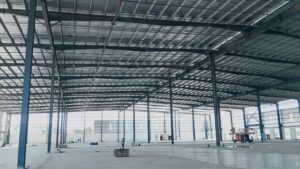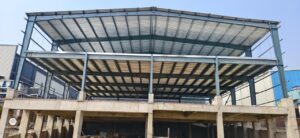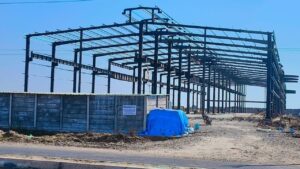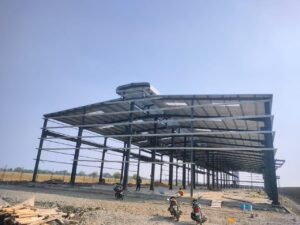
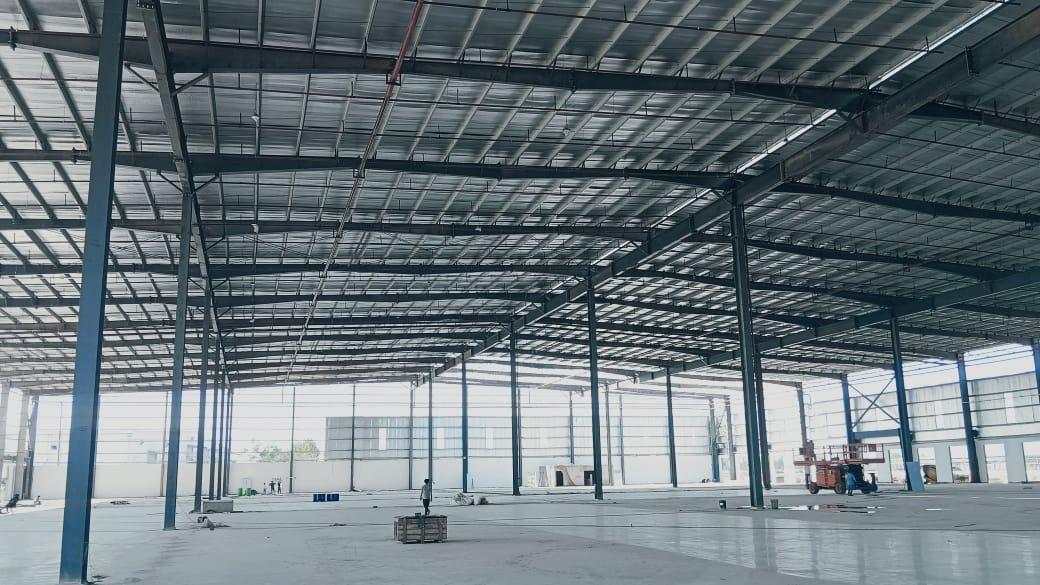
Pre-Engineered Buildings (PEBs) have become the preferred construction solution for industrial, commercial, and infrastructure projects due to their speed, cost efficiency, and design flexibility. One of the most critical structural components of a PEB assembly is the roofing system. The right roof profile and material grade not only protect the building from environmental conditions but also ensure structural durability, energy efficiency, and optimized load distribution.
In this technical guide, we will explore the Types of PEB Roofs in detail and help you choose the best roofing for Pre-Engineered Buildings based on structural application, micro-climate conditions, and life-cycle budget.
Table of Contents
ToggleWhat Is a PEB Roofing System?
A PEB roofing system is a factory-manufactured building envelope designed specifically for integration with a primary steel frame. It consists of high-tensile roofing sheets, sub-structural insulation, engineered fasteners, purlins, and flashing accessories that work together to provide diaphragm strength, weather resistance, and thermal protection.
Unlike conventional R.C.C. roofs, PEB roofs are designed for high strength-to-weight ratios, precisely engineered to minimize dead loads, and quick to install, making them ideal for large-span structures requiring clear-span interiors.
Importance of Choosing the Right Roofing for PEB Buildings
Selecting the best roofing for Pre-Engineered Buildings is crucial because:
- It protects against uplift forces during high-velocity wind events.
- Enhances the structural lifespan by preventing oxidation of the primary frame.
- Improves thermal transmittance (U-value) and indoor comfort.
- Reduces maintenance-heavy leak points at the laps and penetrations.
- Supports faster construction and faster ROI for factory owners.
Engineering Analysis: Types of PEB Roofs
1. Single Skin Roofing System (Screw-Down Profile)
Single skin roofing is the standard diaphragm option.
- Technical Specs: Made from a single metal sheet (usually 0.50mm – 0.70mm BMT GI, Galvalume, or color-coated steel with minimum 345 MPa yield strength).
- Benefits: Low initial CAPEX, quick installation, and suitable for unheated large-span buildings.
- Limitations: High risk of condensation and thermal bridging; not recommended for temperature-sensitive inventory.
2. Double Skin Roofing System (Built-up System)
Double skin roofing is considered one of the best roofing options for industrial facilities where thermal comfort is mandated by energy codes.
- Features: Two metal sheets with a vapor barrier and insulation material in between.
- Thermal Performance: Insulation materials include glass wool, rock wool, or PU foam to achieve specific R-values.
- Applications: Manufacturing units, pharma hubs, and commercial buildings.
3. Standing Seam Roof System (The Gold Standard)
Standing seam roofs are a premium mechanically-seamed solution.
- Features: Long metal panels joined using 360-degree raised seams without piercing the weather-exposed surface.
- Benefits: Total leak-proof roofing system, superior wind resistance (UL 580 Class 90 rated), and allows for unrestricted thermal expansion and contraction.
- Applications: Airports, logistics parks, and low-slope industrial buildings.
Comparative Data: Selecting the Right Solution
| Feature | Single Skin | Standing Seam | Insulated Sandwich Panel |
| Water Tightness | Moderate (Screw-fixed) | Superior (No piercings) | Excellent (Interlocking joints) |
| Thermal Efficiency | Low | Moderate (with Glasswool) | High (PIR/PUR Core) |
| Wind Uplift Resistance | Standard | High (Mechanical Seam) | High (Structural Integrity) |
| Acoustics | High Noise | Moderate | Low (Dampened) |
| Installation Speed | Fastest | Moderate | Fast (Modular) |
Factors to Consider for Structural Durability
Before finalizing a roofing system, your engineering team must consider:
- Wind Speed & Zone: (e.g., cyclonic regions require specific fastener frequency and rib height).
- Live Loads & Collateral Loads: (e.g., Solar panel arrays or HVAC walkways).
- Corrosion Environment: (e.g., C3 to C5-M marine environments require higher GSM coating or Alu-Zinc ratios).
- Expansion & Contraction: Roof runs exceeding 30m should utilize standing seam systems to avoid fastener slotting.
Conclusion
Selecting the right roofing system is essential for maximizing the structural performance and lifespan of a Pre-Engineered Building. The best roofing for Pre-Engineered Buildings depends on your site-specific wind loads, climate conditions, required U-values, and budget. Consulting an experienced structural consultant or PEB engineering lead can help you make the right decision.
Frequently Asked Questions
1. Which is the best roofing for Pre-Engineered Buildings?
The best roofing for Pre-Engineered Buildings depends on the building’s use and climate. For temperature-controlled buildings, double skin or sandwich panel roofing is ideal, while standing seam roofs are best for durability and leak-proof performance.
2. How do I choose the right PEB roofing system for my project?
To choose the right PEB roofing system, consider factors like climate, building usage, insulation needs, budget, and maintenance requirements. Consulting a professional PEB manufacturer ensures you select the most suitable option.
3. What is the difference between single skin and double skin PEB roofing?
Single skin roofing uses one metal sheet and is cost-effective, while double skin roofing consists of two sheets with insulation in between, providing better thermal and sound insulation and improved energy efficiency.