Table of Contents
ToggleIntroduction
India’s industrial and infrastructure sector is growing rapidly. With the expansion of manufacturing, logistics, e-commerce, food processing, pharmaceuticals, agriculture, and retail industries, the demand for faster, stronger, and cost-effective construction solutions has increased significantly.
This is where Pre-Engineered Buildings (PEBs) are transforming the construction industry.
PEB buildings are modern steel structures designed and manufactured in factories before being assembled on-site. Compared to conventional concrete construction, PEB structures offer faster project completion, lower costs, flexible designs, high durability, and excellent space utilization.
Today, PEB buildings are widely used for warehouses, factories, cold storage facilities, logistics parks, industrial sheds, and commercial infrastructure across India.
In this blog, we will explore how PEB buildings benefit warehouses, factories, and cold storage facilities, and which industries in India gain the maximum advantages from PEB construction.
What Are PEB Buildings?
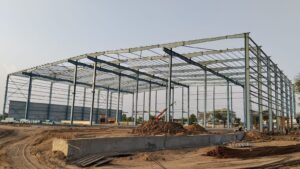
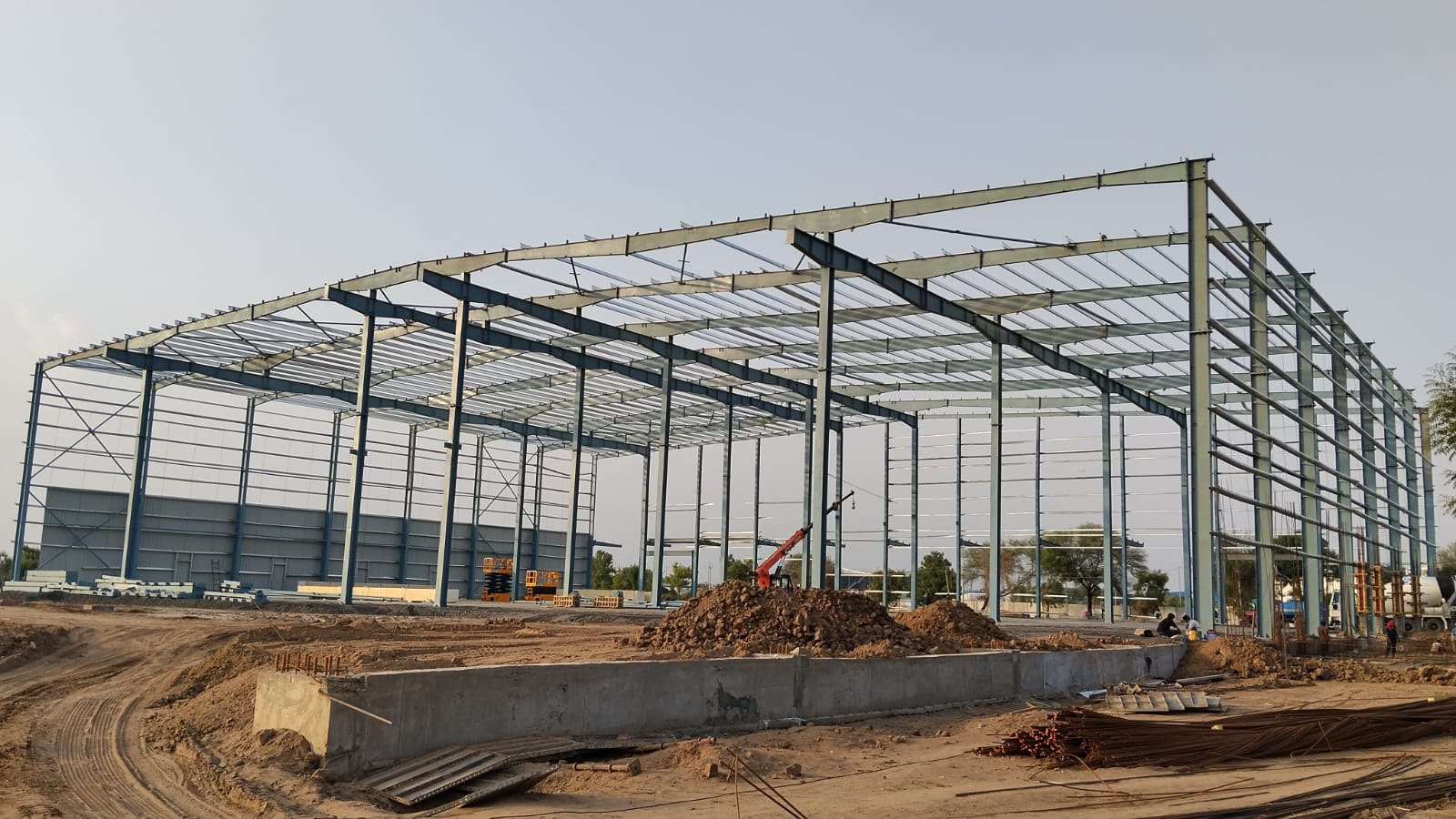
Pre-Engineered Buildings (PEBs) are steel structures that are pre-designed and fabricated using advanced engineering technology. Explore our design capabilities to understand how each component is engineered for precision. The building components are manufactured in a factory and then transported to the construction site for installation.
A typical PEB structure includes:
- Primary framing system
- Secondary framing system
- Roofing sheets and wall cladding
- Insulation systems
- Ventilation systems
- Mezzanine floors
- Skylights and accessories
PEB buildings are highly customizable and can be designed according to industry-specific requirements.
Why PEB Buildings Are Becoming Popular in India
India’s industrial sector requires buildings that are quick to construct, cost-efficient, durable, scalable, energy-efficient, and suitable for large-span spaces. PEB structures fulfill all these requirements effectively.
Some major reasons for their popularity include:
1. Faster Construction
PEB components are manufactured in advance, reducing on-site construction time by up to 40–60%.
2. Lower Construction Cost
Optimized steel usage and reduced labor costs make PEB buildings more affordable than conventional structures.
3. Large Clear Span Space
PEB structures provide column-free interiors, which is ideal for warehouses and manufacturing units.
4. Flexibility & Expansion
Businesses can easily expand PEB buildings in the future without major structural changes.
5. Low Maintenance
High-quality steel and protective coatings increase durability and reduce maintenance costs.
6. Sustainable Construction
Steel is recyclable, making PEB buildings an environmentally friendly construction solution.
PEB Buildings for Warehouses
Warehousing is one of the biggest sectors using PEB construction in India.
The rise of e-commerce, logistics, FMCG, and organized retail has increased the need for modern warehousing infrastructure.
Why Warehouses Prefer PEB Structures
- Large Open Space: Warehouses require maximum storage area without internal columns. PEB structures provide wide clear spans for better inventory management.
- Faster Project Delivery: Businesses can start operations earlier because PEB warehouses are completed quickly.
- Cost Efficiency: Lower construction and maintenance costs help businesses improve operational profitability.
- Better Ventilation & Lighting: PEB warehouses can include turbo ventilators, skylights, insulated roofing, and ridge ventilators. These features improve working conditions and reduce electricity costs.
- Easy Expansion: Warehouse businesses often expand operations. PEB structures allow future extensions with minimal disruption.
Industries That Benefit from PEB Warehouses
1. E-Commerce Industry
Online shopping growth has created huge demand for fulfillment centers and distribution hubs.
PEB warehouses help e-commerce companies with faster warehouse setup, high storage capacity, efficient logistics management, and scalability.
2. Logistics & Supply Chain Industry
Logistics companies need large storage and transportation hubs near highways and industrial corridors.
PEB warehouses support truck movement, loading/unloading operations, inventory management, and multi-location expansion.
3. FMCG Industry
Fast-Moving Consumer Goods companies require warehouses for storing products in bulk. PEB warehouses help maintain faster distribution, organized storage, and cost-efficient operations.
4. Retail Industry
Retail chains use PEB warehouses as central distribution centers for inventory management and supply operations.
5. Agriculture Storage
Agricultural products like grains, seeds, fertilizers, and equipment can be stored efficiently in PEB warehouse structures.
PEB Buildings for Factories
Manufacturing industries across India are increasingly shifting toward PEB factory buildings.
Factories require robust structures with efficient layouts, heavy load capacity, and flexibility for machinery installation. PEB factory buildings meet all these requirements.
Benefits of PEB Structures for Factories
1. Faster Industrial Setup
Manufacturers can begin production quickly because PEB factory buildings are completed in less time.
2. Flexible Interior Layout
PEB structures allow customized layouts based on machinery, workflow, and production lines. See our completed factory projects for real examples.
3. High Structural Strength
PEB buildings are engineered to withstand heavy loads, wind pressure, seismic conditions, and harsh weather.
4. Better Space Utilization
Clear-span designs improve workflow efficiency and machine placement.
5. Energy Efficiency
Insulated roofing and wall panels help maintain internal temperatures and reduce power consumption.
6. Low Maintenance Cost
Steel structures require less maintenance than traditional RCC buildings.
Industries That Benefit from PEB Factory Buildings
1. Automobile Industry
Automobile manufacturing plants require large production spaces and heavy-duty structures. PEB buildings support assembly lines, storage areas, manufacturing units, and service workshops.
2. Textile Industry
Textile factories need wide open spaces for machinery and production processes. PEB structures help create efficient production flow, better ventilation, and cost-effective factory setups.
3. Engineering & Fabrication Industry
Heavy engineering industries prefer PEB factory sheds because of their structural strength and durability.
4. Electronics Manufacturing
Electronics factories require clean, organized, and expandable infrastructure. PEB buildings support modern industrial layouts and controlled environments.
5. Food Processing Industry
Food manufacturing units need hygienic and temperature-controlled structures. PEB buildings can include insulated panels and ventilation systems suitable for food processing.
6. Pharmaceutical Industry
Pharma companies require production areas with controlled environments and specialized storage systems. PEB structures offer flexibility for customized factory designs.
PEB Buildings for Cold Storage Facilities
Cold storage infrastructure is growing rapidly in India due to increasing demand from agriculture, dairy, food processing, pharmaceuticals, and frozen food industries.
PEB cold storage buildings provide excellent thermal efficiency and faster construction compared to traditional buildings.
Why PEB Structures Are Ideal for Cold Storage
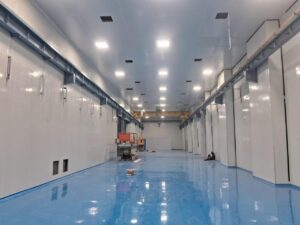
- Thermal Insulation Support: PEB buildings can integrate insulated sandwich panels that help maintain temperature control.
- Faster Construction: Cold storage facilities can become operational quickly with prefabricated steel structures.
- Moisture Resistance: PEB structures use coated steel and insulated materials that resist moisture and corrosion.
- Energy Efficiency: Proper insulation reduces cooling loss and lowers electricity consumption.
- Hygienic Environment: PEB buildings provide smooth surfaces and organized layouts suitable for food and pharmaceutical storage.
Industries That Benefit from PEB Cold Storage
1. Food & Beverage Industry
Cold storage facilities help preserve frozen foods, dairy products, meat products, processed foods, and beverages.
2. Agriculture Industry
Farmers and agri-businesses use cold storage for fruits, vegetables, seeds, and flowers. This helps reduce post-harvest losses.
3. Pharmaceutical Industry
Medicines and vaccines often require temperature-controlled storage. PEB cold storage buildings help maintain proper storage conditions.
4. Dairy Industry
Milk and dairy products need refrigeration to maintain quality and shelf life. PEB cold storage facilities provide energy-efficient storage solutions.
5. Seafood Industry
Seafood exporters require temperature-controlled warehouses for storage and export operations.
Why Indian Industries Prefer PEB Construction
Several factors are driving industrial sectors in India toward PEB construction.
- Growing Industrialization: India’s expanding manufacturing and logistics sectors need faster infrastructure development.
- Government Infrastructure Push: Initiatives like Make in India, PM Gati Shakti, Industrial Corridors, and Smart Cities Mission are increasing demand for industrial buildings.
- Rising Land & Construction Costs: Businesses prefer PEB structures because they reduce overall project costs.
- Need for Faster ROI: Quick construction enables industries to start operations faster and generate revenue earlier.
- Sustainability Goals: PEB structures support green building practices and energy efficiency.
Key Features to Consider in Industrial PEB Buildings
When constructing a PEB warehouse, factory, or cold storage facility, industries should consider:
1. Structural Design
Ensure the building is designed according to load requirements and future expansion plans. Learn more about our design capabilities.
2. Insulation System
Insulation is critical for temperature-sensitive operations and energy savings.
3. Ventilation & Lighting
Proper ventilation and natural lighting improve worker productivity and reduce utility costs.
4. Flooring Requirements
Different industries require different floor load capacities.
5. Fire Safety Standards
Industrial buildings should include proper fire safety systems and compliance measures.
6. Expansion Capability
Choose a design that supports future growth and modifications.
Future of PEB Buildings in India
The future of PEB construction in India looks extremely promising.
The increasing demand for industrial sheds, warehouses, cold storage units, manufacturing facilities, logistics parks, data centers, and commercial infrastructure will continue to boost the PEB industry.
Technological advancements such as automation, smart building systems, energy-efficient materials, and sustainable steel construction are making PEB buildings even more attractive for businesses.
As industries focus on speed, scalability, and operational efficiency, PEB construction will become the preferred building solution across multiple sectors.
Conclusion
PEB buildings have revolutionized industrial construction in India by offering fast, cost-effective, durable, and flexible infrastructure solutions.
From warehouses and factories to cold storage facilities, PEB structures provide businesses with modern buildings that improve operational efficiency and reduce construction timelines.
Industries such as e-commerce, logistics, manufacturing, food processing, agriculture, pharmaceuticals, dairy, and retail are among the biggest beneficiaries of PEB construction.
With rapid industrial growth and increasing infrastructure demands in India, PEB buildings are expected to play a major role in shaping the future of industrial development.
Businesses looking for scalable, energy-efficient, and long-lasting industrial infrastructure should explore Pebsky Infra’s PEB solutions and get in touch with our team today.
Frequently Asked Questions
1. What industries use PEB buildings in India?
Industries such as warehousing, logistics, manufacturing, food processing, pharmaceuticals, agriculture, retail, dairy, and cold storage widely use PEB buildings in India.
2. Why are PEB buildings suitable for warehouses?
PEB warehouses offer large clear-span spaces, faster construction, lower costs, and easy expansion options, making them ideal for storage and logistics operations.
3. Are PEB buildings suitable for cold storage facilities?
Yes, PEB buildings are highly suitable for cold storage because they support insulated panels, temperature control systems, and energy-efficient designs.
4. How much time does PEB construction save?
PEB construction can reduce project completion time by around 40–60% compared to conventional construction methods.
5. Are PEB factory buildings durable?
Yes, PEB factory buildings are highly durable and designed to withstand heavy loads, harsh weather conditions, and seismic forces.
6. Can PEB buildings be expanded in the future?
Yes, one of the major advantages of PEB structures is their flexibility for future expansion and modifications.
7. Are PEB buildings cost-effective?
Yes, PEB buildings reduce material wastage, labor costs, and construction time, making them highly cost-effective for industrial projects.