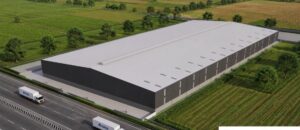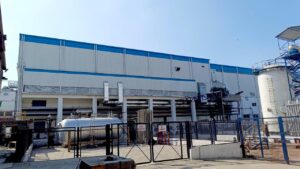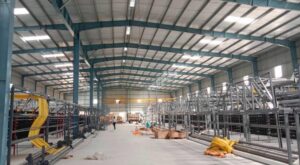
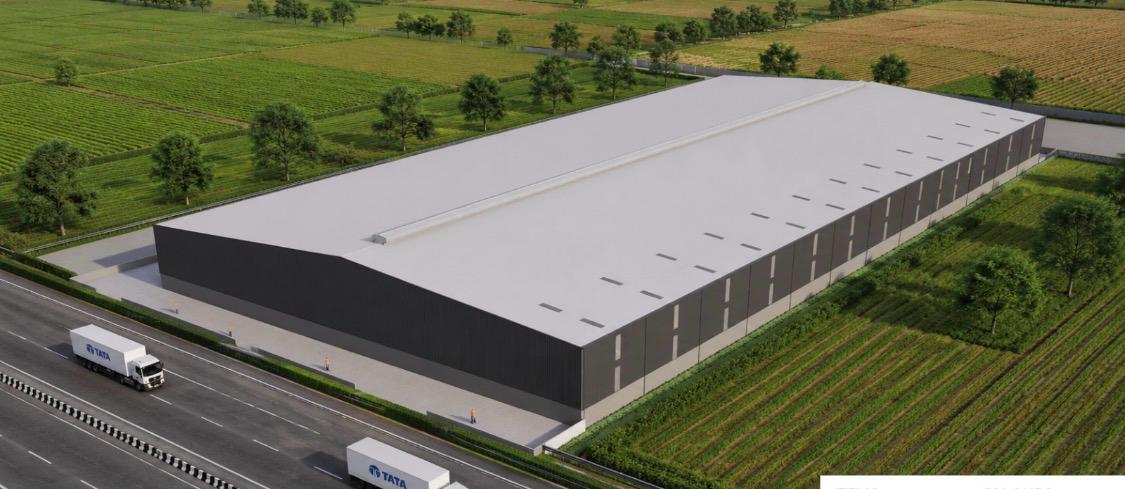
Pre-Engineered Buildings (PEBs) have become a popular choice for factories, warehouses, manufacturing units, workshops, and other industrial projects in India. Businesses need industrial buildings that can be constructed quickly, remain strong and durable, and provide good value over the long term. PEB structures offer an efficient solution for meeting these requirements.
Unlike conventional construction methods, Pre-Engineered Buildings use factory-made steel components that are prepared according to the project requirements and then assembled at the construction site. This approach can help reduce construction time, improve quality control, and make industrial construction more efficient.
For factories and industrial projects, where space, strength, construction speed, and cost are important, PEB structures can provide several advantages.
Here are the top 10 benefits of Pre-Engineered Buildings for factories and industrial projects.
Table of Contents
Toggle1. Faster Construction
One of the biggest benefits of Pre-Engineered Buildings is faster construction. Most major steel components are manufactured and prepared at a controlled facility before they reach the project site.
Once the foundation work is ready, the structural components can be transported to the site and assembled systematically. This can significantly reduce the time required for structural construction compared with many conventional building methods.
Faster construction allows businesses to start their factory, warehouse, or industrial operations sooner. For companies where project delays can affect production and revenue, reducing construction time can be a major advantage.
2. Cost-Effective Construction
PEB structures can offer cost advantages through efficient material usage, faster installation, reduced site labour requirements, and shorter project durations.
The overall project cost depends on several factors, including building size, location, soil conditions, steel prices, loading requirements, foundation requirements, and other project specifications. However, the controlled manufacturing process can help reduce unnecessary material wastage.
Lower construction time can also reduce expenses related to labour, equipment rentals, site management, and temporary facilities.
For businesses planning a factory or industrial building, this can make PEB construction a practical option for managing the overall project budget.
3. Strong and Durable Structure
Factories and industrial buildings often need to handle heavy loads, equipment, machinery, wind forces, and other operational requirements. PEB structures are made primarily from structural steel, which provides high strength and durability.
The structural system can be engineered according to the specific requirements of the project. Factors such as building dimensions, loading conditions, wind loads, seismic conditions, and operational requirements can be considered during the engineering process.
With proper fabrication, installation, corrosion protection, and regular maintenance, a PEB structure can provide long-term service for industrial applications.
4. Large Clear Span Areas
Factories and industrial facilities often require large open areas for machinery, production lines, storage, movement of materials, and transportation equipment.
PEB structures can provide large clear-span spaces with fewer internal columns. This creates greater flexibility for arranging machinery, production areas, storage zones, and internal movement.
For example, a manufacturing facility may need space for cranes, conveyors, assembly lines, or large equipment. A suitable PEB structure can accommodate these operational requirements while making effective use of the available building area.
5. Better Quality Control
Another important advantage of PEB construction is the controlled manufacturing environment.
Steel components are fabricated using planned processes and equipment before being transported to the construction site. This allows manufacturers to maintain better control over dimensions, fabrication processes, welding, cutting, and other production activities.
Factory-based production can also reduce the impact of certain weather-related challenges that may affect on-site construction activities.
Consistent quality control is particularly important for industrial buildings because structural components need to perform reliably throughout the building’s service life.
6. Reduced Material Wastage
Efficient material utilization is an important part of modern industrial construction. In PEB construction, steel components are manufactured according to project requirements, which can help minimize unnecessary cutting and material wastage.
The controlled fabrication process allows steel to be prepared with greater accuracy before it reaches the construction site.
Reduced material wastage can contribute to better resource utilization and may also help businesses manage construction costs more effectively.
7. Easy Expansion and Future Modification
Industrial businesses often expand their production capacity as their operations grow. A factory that meets today’s requirements may need additional space in the future.
PEB structures can provide flexibility for future expansion when the original structure is planned with possible extensions in mind.
Additional bays, storage areas, production space, or other extensions may be possible depending on the structural system, site conditions, and original project specifications.
This flexibility can be useful for growing manufacturing companies, logistics businesses, warehouses, and industrial facilities.
8. Suitable for Different Industrial Applications
Pre-Engineered Buildings can be used for a wide range of industrial applications.
Common applications include:
- Manufacturing factories
- Industrial warehouses
- Engineering workshops
- Automobile facilities
- Logistics centres
- Cold storage buildings
- Agricultural storage facilities
- Production units
- Distribution centres
- Industrial sheds
- Assembly plants
- Maintenance workshops
The structural system can be adapted according to the operational requirements of the facility. This makes PEB construction suitable for different industries and building sizes.
9. Lower Maintenance Requirements
A properly constructed and maintained PEB structure can provide reliable long-term performance.
Protective coatings and appropriate corrosion protection can help protect steel components from environmental conditions. Regular inspection and maintenance of the roof, wall panels, drainage systems, fasteners, coatings, and structural components can further support the building’s service life.
Maintenance requirements depend on the location, environmental conditions, building usage, material specifications, and quality of installation.
For industrial businesses, a well-maintained building can help reduce unexpected repair requirements and maintain a safe working environment.
10. Environmentally Efficient Construction
Steel is a recyclable construction material, making PEB structures a suitable option for businesses looking to use resources more efficiently.
The controlled fabrication process can help reduce material wastage, while steel components can potentially be reused or recycled at the end of their service life.
PEB construction can also reduce certain site activities because a significant portion of the structural components is prepared before arriving at the construction location.
For companies focusing on sustainable industrial development, PEB construction can support more efficient use of construction materials.
Why Choose PEB for Factory Construction?
Factory construction requires careful consideration of structural strength, construction time, operational requirements, cost, and future expansion.
Pre-Engineered Buildings can provide a combination of these advantages through factory-fabricated steel components and efficient site assembly.
For example, a manufacturing company planning a new production facility may need:
- Large open working areas
- Space for heavy machinery
- Fast construction
- Material handling systems
- Future expansion possibilities
- Durable structural components
- Efficient use of available space
- Controlled construction costs
PEB construction can address many of these requirements when the building is properly engineered and installed according to the project’s specifications.
PEB vs Conventional Construction for Industrial Buildings
Both PEB and conventional construction methods have their own applications. The right option depends on factors such as project requirements, building size, location, structural requirements, budget, construction timeline, and future expansion plans.
PEB construction generally provides advantages in terms of faster structural assembly, factory-controlled fabrication, material efficiency, and large open spaces.
For industrial projects where construction speed and operational flexibility are important, PEB can be a practical alternative to conventional construction.
Factors to Consider Before Constructing a PEB Factory
Before starting a PEB project, businesses should evaluate several important factors.
The soil condition should be checked because foundation requirements depend on the site’s ground conditions.
The building dimensions and operational requirements should also be established before structural planning begins. Machinery, cranes, storage systems, production lines, and material movement can affect the building requirements.
Wind and seismic conditions should be considered according to the project’s location.
The roofing and wall materials should be selected according to the industrial environment and expected performance.
Businesses should also consider future expansion requirements before finalizing the project.
Most importantly, the project should be handled by experienced professionals who follow applicable structural standards and quality-control procedures.
Conclusion
Pre-Engineered Buildings offer several benefits for factories and industrial projects, including faster construction, efficient material usage, durability, large clear-span areas, quality control, and future expansion possibilities.
For manufacturing units, warehouses, workshops, logistics facilities, and other industrial buildings, PEB construction can provide a practical approach to developing strong and functional structures within a planned project timeline.
However, the final performance and cost of a PEB building depend on proper engineering, material quality, fabrication, foundation work, transportation, and installation. Therefore, businesses should work with an experienced PEB manufacturer and construction team to ensure that the project meets its structural and operational requirements.
Frequently Asked Questions About PEB for Factories and Industrial Projects
1. What is a Pre-Engineered Building?
A Pre-Engineered Building is a steel building system in which major structural components are manufactured and prepared at a factory according to project requirements and then transported to the construction site for assembly.
2. Are PEB structures suitable for factories?
Yes. PEB structures are widely suitable for factories, manufacturing units, workshops, warehouses, and other industrial facilities because they can provide large open spaces, structural strength, faster construction, and flexibility for different industrial requirements.
3. How long does it take to construct a PEB factory?
The construction timeline depends on the size and complexity of the project, foundation work, fabrication requirements, transportation, site conditions, and installation. PEB construction can generally reduce structural construction time compared with many conventional construction methods.
4. Are PEB buildings durable?
Yes. Properly engineered and maintained PEB structures can provide long-term durability. Their performance depends on factors such as structural engineering, steel quality, protective coatings, installation quality, environmental conditions, and regular maintenance.
5. Can a PEB factory be expanded in the future?
Yes, future expansion can be possible depending on the original structural system, site conditions, available space, and project requirements. Future expansion should ideally be considered during the initial planning stage.
6. Are PEB structures more cost-effective than conventional buildings?
PEB structures can be cost-effective because of faster construction, efficient material usage, controlled fabrication, and potentially lower site labour requirements. However, the actual cost depends on project size, steel prices, foundation requirements, location, loading conditions, and other specifications.
7. What types of industrial buildings can be constructed using PEB?
PEB systems can be used for factories, warehouses, workshops, manufacturing plants, logistics centres, cold storage facilities, automobile facilities, distribution centres, agricultural storage buildings, and various other industrial applications.