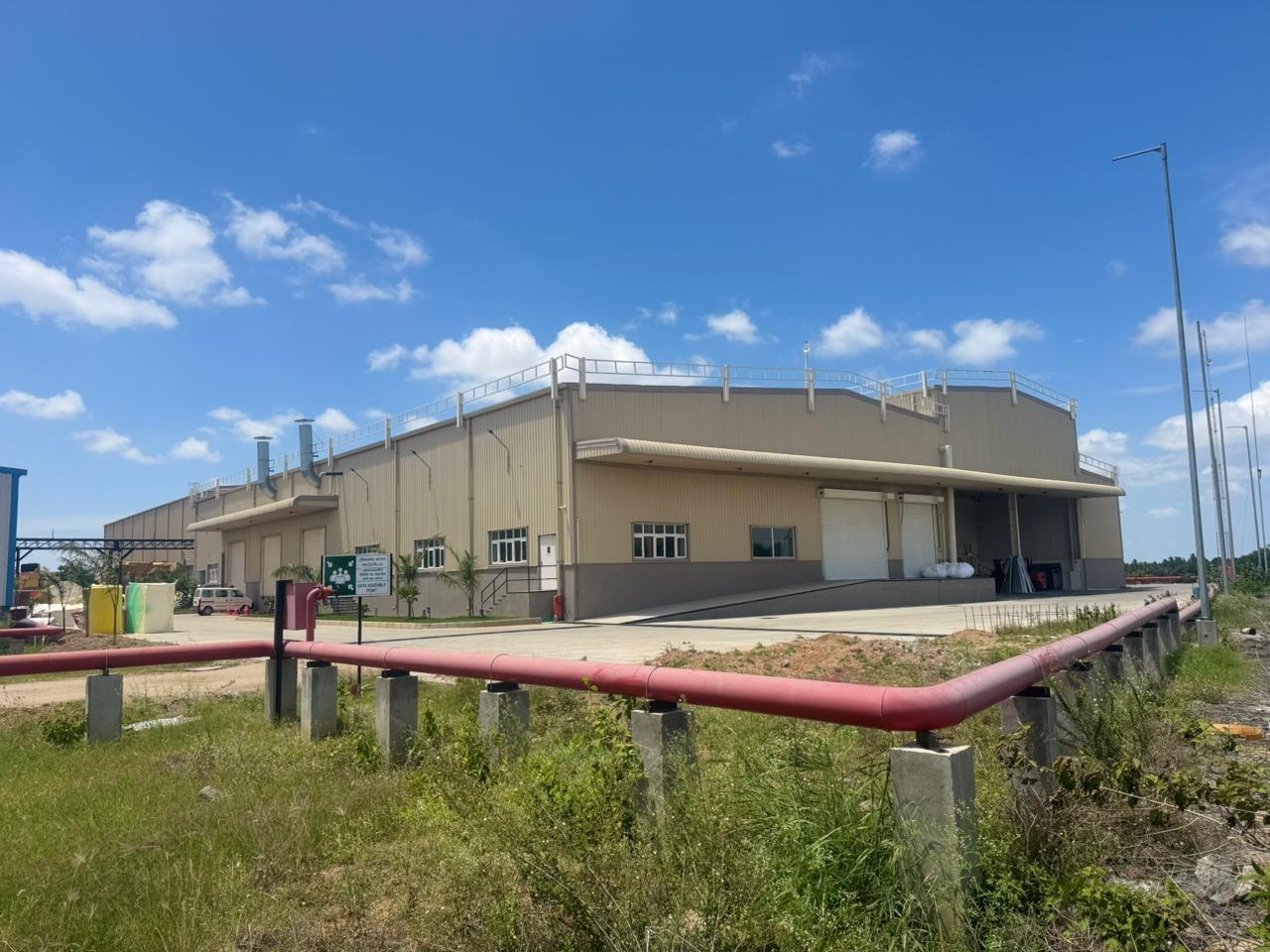
India’s climate doesn’t hold back. Coastal belts face cyclones, the north sees hailstorms and heavy snowfall in the hills, and most of the country deals with punishing summer heat followed by monsoon downpours. For factory owners, warehouse operators, and developers, choosing the right building system isn’t just about cost or speed — it’s about whether the structure will still be standing strong after the next big storm.
This is where Pre-Engineered Buildings (PEB) made of steel have a clear advantage over conventional concrete or brick-and-mortar construction. Here’s a detailed look at why metal buildings hold up so well against extreme weather, and what makes them a smarter long-term investment.
Table of Contents
ToggleSuperior Strength-to-Weight Ratio
Steel has one of the best strength-to-weight ratios of any construction material. A metal building can carry heavy loads — wind pressure, snow accumulation, or seismic forces — without needing the bulky mass that concrete structures rely on. This means the frame flexes and absorbs stress instead of cracking or crumbling under sudden pressure, which is exactly what happens during high-wind events or tremors.
The Primary Framing System in a pre-engineered building is calculated for specific load conditions — wind speed, seismic zone, and terrain category — before a single beam is fabricated. That means the structure is built to handle the exact weather stresses of its location, not a generic worst-case guess.
Engineered for Wind Resistance
High winds and cyclones are among the biggest threats to buildings in coastal and open terrain areas. Metal buildings are engineered with continuous, rigid frame connections that distribute wind loads evenly across the structure instead of concentrating stress at a few weak points. Bolted moment connections at the eaves and knee joints keep the frame from racking or shifting during gusts.
Additionally, the Secondary Framing System — purlins, girts, and bracing — adds another layer of lateral stability, holding the roofing and wall panels firmly in place even when wind uplift forces try to peel them away.
Roofing and Cladding Built for the Elements
A building’s roof is usually the first thing to fail in a storm. Standard roofing sheets, seams, and fasteners are common failure points during heavy rain, hail, or wind uplift. Metal buildings use specially engineered Roofing & Cladding Systems with interlocking standing-seam profiles, concealed fasteners, and weatherproof sealants that prevent water infiltration and resist wind uplift far better than traditional sheeting.
These systems are also treated with corrosion-resistant coatings, which matter enormously in humid or coastal environments where constant moisture exposure would otherwise degrade a roof within a few years.
Non-Combustible and Corrosion-Resistant Material
Unlike wood-frame structures, steel doesn’t burn, warp, or rot. This makes metal buildings significantly safer during heatwaves, wildfires, or lightning-related incidents. Steel is also immune to termites and pest damage, which is a real concern for timber structures in India’s humid regions.
Modern galvanized and painted steel coatings further protect against rust, ensuring the structure holds its integrity through repeated cycles of rain, humidity, and heat — something older, untreated metal buildings used to struggle with.
Seismic Performance
Steel’s natural ductility allows it to bend slightly and absorb seismic energy rather than fracturing outright, which is a critical safety feature in earthquake-prone zones. Pre-engineered steel frames are built with this flexibility in mind, reducing the risk of sudden structural collapse compared to more rigid masonry construction.
Snow and Heavy Rainfall Load Management
In hill regions and northern states where snowfall and heavy monsoon rain are seasonal realities, roof slope matters enormously. PEB roof pitches and purlin spacing are calculated to shed snow and rainwater efficiently, preventing the kind of load buildup that causes roof collapses in poorly planned structures. This calculation is part of the same engineering process covered under Capabilities, where each building is modeled against its specific site conditions before fabrication begins.
Faster Construction Means Less Weather Exposure During Build
Extreme weather doesn’t just threaten finished buildings — it threatens ongoing construction too. Because PEB components are fabricated off-site and assembled on location, construction timelines are dramatically shorter than conventional building methods. Less time on-site means less exposure to weather-related project delays, material damage, and safety risks during the build phase itself.
Consistent Quality Through Factory-Controlled Manufacturing
Every steel member in a pre-engineered building is fabricated in a controlled plant environment, not shaped on-site under variable conditions. This ensures dimensional accuracy, consistent weld quality, and precise tolerances — all of which directly affect how well a structure performs under stress. Our Plant Capabilities are built around this principle, ensuring every component meets the same rigorous standard before it ever reaches a job site.
Durability That Reduces Long-Term Maintenance
Because steel resists rust, pests, and structural fatigue far better than traditional materials, metal buildings typically require far less maintenance over their lifespan. That translates into lower repair costs after every monsoon or storm season, and a structure that retains its resale and operational value for decades.
Real-World Proof: Projects Built to Last
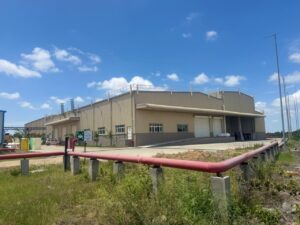
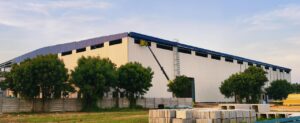
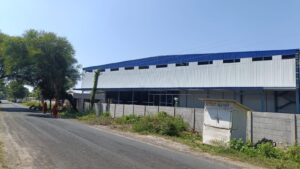
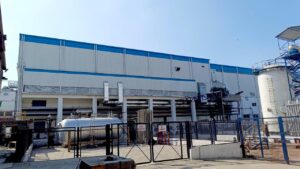
From cold storage facilities to automotive plants, pre-engineered buildings have proven their weather resilience across a wide range of industries and climates. You can see examples of this engineering in action across our Completed Projects, spanning coastal, industrial, and high-load environments throughout India.
Final Thoughts
Extreme weather isn’t a rare event anymore — it’s a planning requirement. Metal buildings, engineered correctly from the ground up, offer a level of structural resilience that conventional construction methods simply can’t match on speed, cost, or long-term durability.
If you’re planning a new industrial or commercial facility and want a structure built to withstand whatever the climate throws at it, explore our PEB Overview or get in touch with our team through the Contact Us page to discuss your project requirements.
Frequently Asked Questions
1. Are metal buildings actually safer than concrete buildings in storms?
In many cases, yes. Steel’s flexibility allows a structure to absorb and distribute wind and seismic loads rather than resisting them rigidly, which reduces the risk of sudden cracking or collapse. When engineered correctly through a proper Primary Framing System, metal buildings can match or exceed concrete performance in high-wind and seismic zones.
2. Can pre-engineered buildings handle cyclone-prone coastal regions?
Yes. PEB structures for coastal areas are built with corrosion-resistant coatings, reinforced bracing, and wind-load calculations specific to the site’s exposure category, making them well suited to cyclone-prone regions.
3. Do metal buildings rust quickly in humid or coastal climates?
Not when properly coated. Galvanized steel and painted finishes used in modern Roofing & Cladding Systems are specifically formulated to resist corrosion, even in high-humidity or salt-air environments.
4. How do metal buildings perform in earthquake-prone areas?
Steel’s ductility lets the frame flex under seismic stress instead of fracturing, which is why pre-engineered steel structures are widely used in earthquake-sensitive zones across India.
5. Can a metal building handle heavy snow loads?
Yes. Roof slope, purlin spacing, and load calculations are done specifically for the expected snow and rainfall in the building’s location, so accumulation is shed efficiently instead of stressing the roof structure.
6. Are pre-engineered buildings more expensive to maintain after extreme weather events?
Generally, no. Steel’s resistance to rust, pests, and fatigue means fewer repairs are needed after storms or monsoon seasons compared to conventional brick-and-mortar structures.
7. How long does it take to construct a weather-resilient PEB structure?
Because components are fabricated off-site and assembled on location, PEB construction is significantly faster than conventional building methods, often cutting timelines by 30-50%, which also reduces weather-related delays during the build phase.
8. Is PEB Sky Infra’s steel sourced and tested for extreme weather performance?
Yes. All structural components are manufactured under controlled conditions as outlined in our Plant Capabilities, ensuring consistent quality and performance standards across every project, regardless of the climate it’s built for.